“Understanding and Being Understood” — Information Needs and the Development of Information Resources on Trauma and Psychotherapy for Young Refugees
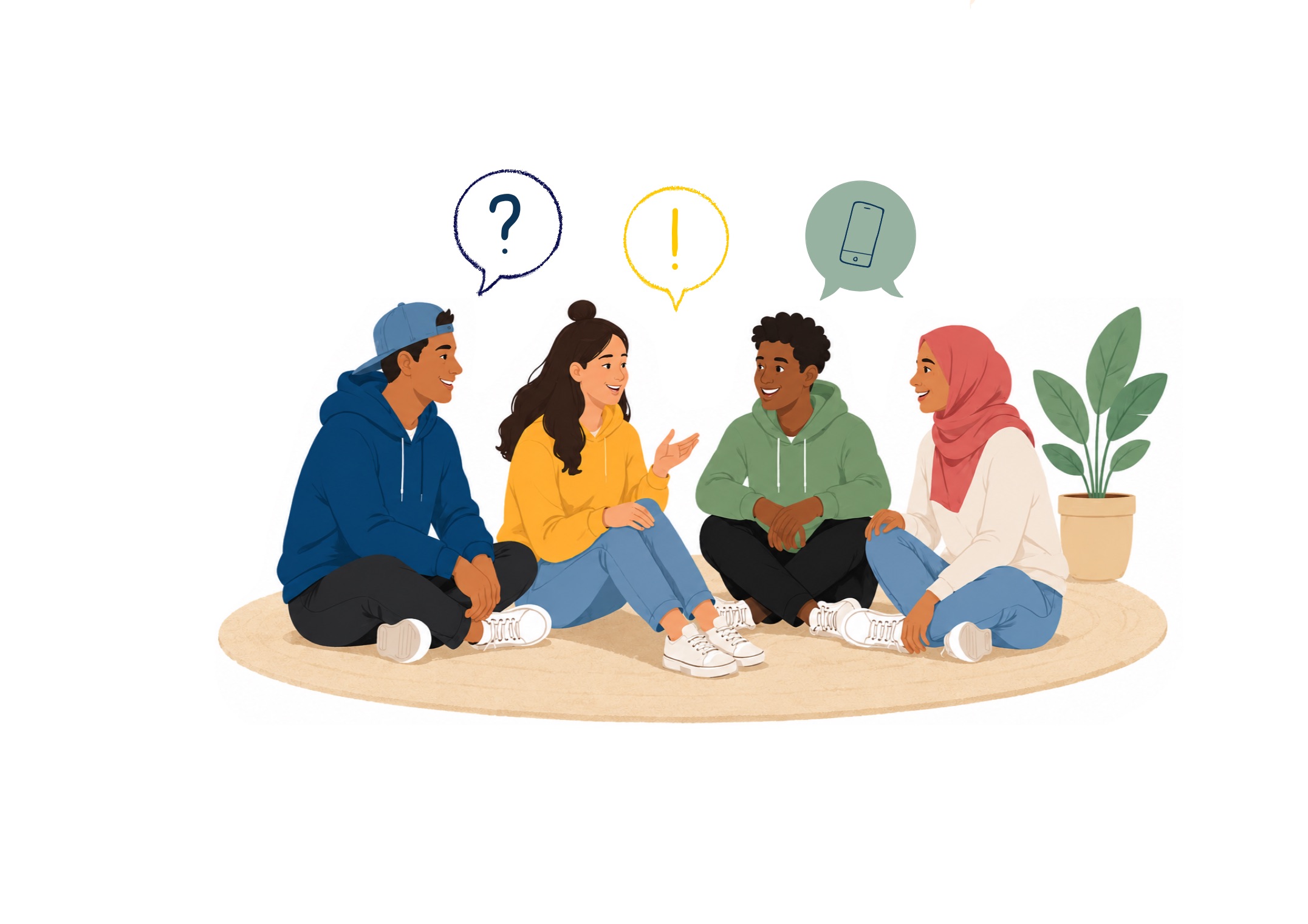
The “Understanding and Being Understood” project aims to make it easier for young refugees to access psychotherapy services related to trauma and trauma-related disorders.
Project background
Young refugees experience a wide range of psychosocial stressors and symptoms of distress. Only a small proportion of them seek psychotherapeutic support. Untreated symptoms resulting from trauma carry a high risk of the symptoms becoming chronic, as well as reduced chances of academic success and social participation. One factor influencing the use of such services is mental health literacy. The project is developing a digital program to improve mental health literacy in the area of trauma and trauma-related disorders.
Project objective
As part of the project, an assessment will be conducted of the barriers and needs young refugees face in accessing psychotherapeutic services for trauma and its consequences, as well as their preferences regarding how they receive information on this topic. Furthermore, a digital information resource on psychotherapeutic interventions for trauma and its consequences will be developed and subsequently evaluated. Finally, the usability of AI-supported translation technologies for integration into the resource will be tested.
Project procedure
In a three-step process, focus groups are first used to collaboratively identify the target group’s information needs as well as suitable formats and access channels (e.g., explanatory videos or social media content). Based on this, a low-threshold, culturally sensitive digital information platform is developed and evaluated for usability in collaboration with refugees and experts. Finally, the project will test the extent to which AI-supported translation and language technologies are suitable for translating the content into other languages—including rare ones—while maintaining high quality. The project is designed for the long term and can be widely implemented through existing youth welfare and refugee counseling networks.
Innovation
The participatory approach used in the focus groups and the evaluation of the program ensures that it is well-suited to the target group and that a culturally sensitive approach is taken. The implementation, which is to take place digitally (e.g., explanatory video, social media channel), can continue to be used after the project ends at low cost and with minimal effort. Testing the integration of AI-powered translation and language tools enables use across numerous languages without being limited to common ones. Furthermore, although the digital program is originally designed for the target group of youth with refugee backgrounds, it can also be used by older children and adults whose native language is not German. The project is designed to be sustainable and can be widely implemented through existing youth welfare and refugee counseling networks.
Project lead
T +49 (0)8031 / 805 - 4559 johanna.unterhitzenberger[at]th-rosenheim.de
ORCID iD: 0000-0002-7417-8747
Project duration
2026-04-23 - 2027-04-30Project funding
Funding programme
Stiftung für Psychiatrie und Psychotherapie im Kindes- und JugendalterSustainable Development Goals